Mobile lactate testing services: how they work and what to compare
Learn how mobile lactate testing brings blood lactate diagnostics to your training venue. Compare formats, equipment, and what to verify before booking.
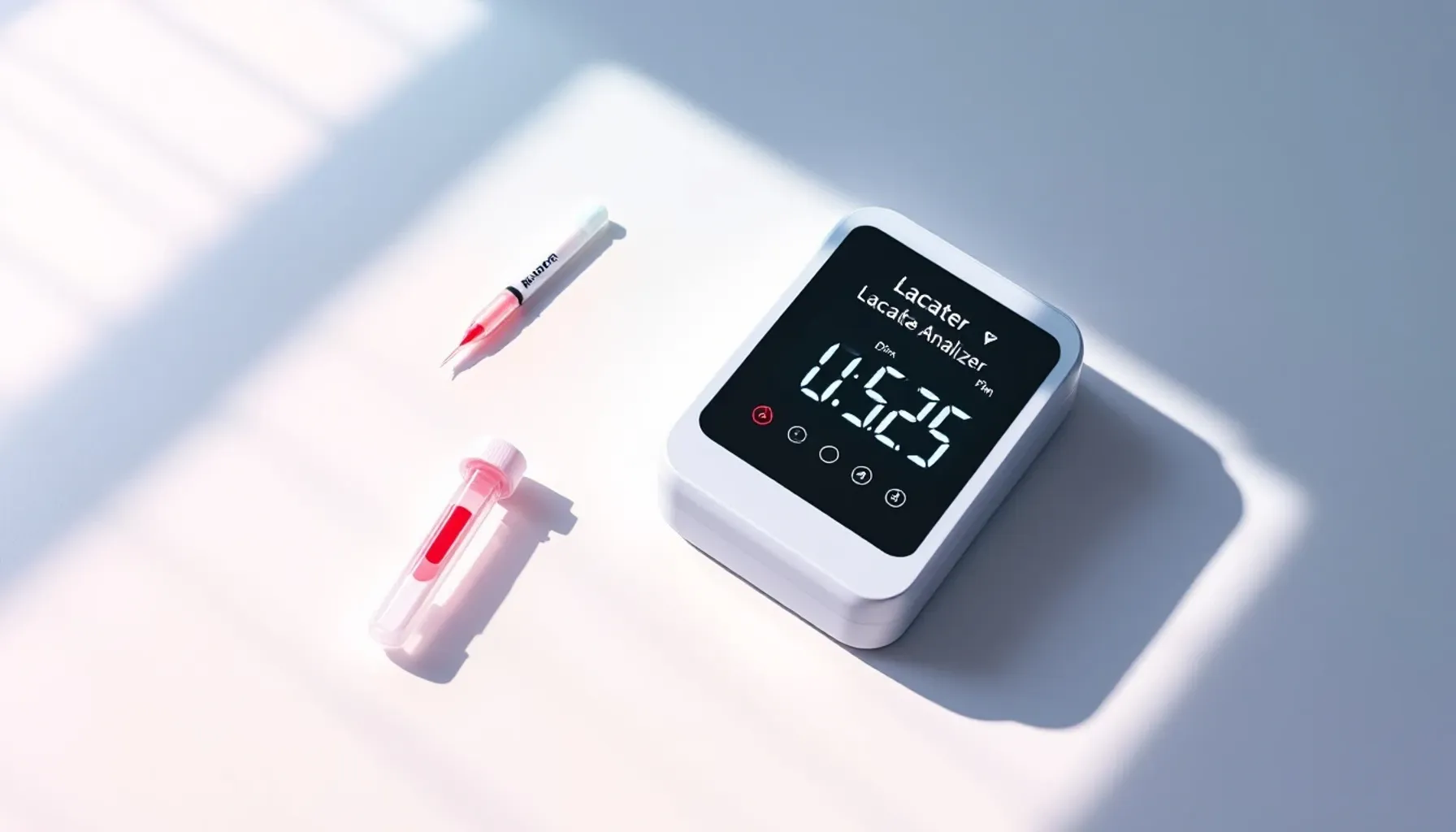
Mobile Lactate Testing Services: How They Work, What to Compare, and How to Get Started
Short answer: Mobile lactate testing services bring blood lactate step-test diagnostics directly to an athlete's training venue — track, velodrome, pool, or road — using portable handheld analysers instead of fixed laboratory equipment. A trained tester guides the session, collects capillary blood samples at each intensity stage, and produces a lactate curve from which LT1, LT2, and training zones can be derived. The format removes the lab visit while preserving the core diagnostic protocol.
Mobile lactate testing services is a service category in which a qualified tester travels to the athlete's location, brings all necessary equipment (portable lactate analyser, lancets, strips, ergometer interface or GPS unit), and conducts a structured blood lactate step test outside a fixed laboratory setting. The result is a dataset — lactate values paired with intensity metrics — that feeds the same analysis methods used in sports science labs.
Key entities this article covers:
- Blood lactate step test: A graded exercise protocol in which intensity increases in discrete stages and a small capillary blood sample is taken at the end of each stage.
- LT1 / LT2 (Lactate Threshold 1 and 2): Two physiologically distinct inflection points on the lactate curve, used to define aerobic and anaerobic training zones.
- Portable lactate analyser: A handheld electrochemical device (examples include Lactate Pro, Lactate Plus, and Lactate Scout) that measures blood lactate concentration from a small sample.
- VLamax: The maximal rate of lactate production, a metric derived from lactate kinetics data that complements threshold values in endurance training planning.
- Lactate curve: The graphical relationship between exercise intensity and blood lactate concentration, from which thresholds and zones are identified.
What Mobile Lactate Testing Actually Means
Fixed Lab vs. Mobile Service vs. Self-Test: A Plain-Language Distinction
Three formats deliver blood lactate data, and confusing them leads to mismatched expectations.
A fixed laboratory setting uses calibrated ergometers (treadmills, cycle ergometers, rowing machines) in a controlled environment. Technicians may use bench-top analysers alongside or instead of handheld meters. The environment is standardised, but the athlete must travel to the facility and perform on equipment that may differ from their usual training setup.
A mobile lactate testing service moves the diagnostic session to the athlete. The tester brings a portable lactate analyser, consumables (strips, lancets, gloves), and the tools needed to record intensity — a power meter interface, GPS watch connection, or pace-per-lap timing. The athlete tests on their own track, road loop, or pool. This means the intensity data reflects their actual training environment, which can be an advantage for protocol validity — particularly for runners and cyclists who train outdoors.
A home self-test kit places the entire process — device operation, blood sampling, data recording, and analysis — in the athlete's hands. No tester is present. The athlete purchases a handheld analyser and strips, follows a self-designed or downloaded protocol, and interprets the results independently (or enters them into an online tool). Self-tests carry a lower per-session cost but require the athlete to manage sampling technique, stage timing, and data quality without external oversight.
The practical distinction: mobile services add coached protocol execution and real-time data quality checks that self-tests do not include, without requiring the athlete to travel to a fixed facility.
What Equipment Travels with a Mobile Testing Provider
A well-equipped mobile provider arrives with:
- A handheld blood lactate analyser and sufficient strip supply for the planned number of stages plus spares
- Calibration solution or reference check strips, depending on the device model
- Lancets, alcohol wipes, gloves, and sharps disposal
- A method for recording intensity — typically a Bluetooth or ANT+ interface to the athlete's power meter or GPS watch, or a lap timer for track protocols
- A data recording sheet or digital form to log lactate value, heart rate, pace or power, and perceived exertion at each stage
- A portable printer or secure file transfer method if same-session reporting is offered
The absence of any of these items — particularly calibration materials and a structured data recording method — is a signal worth noting before booking.
How a Mobile Lactate Step Test Is Conducted
Stage Structure: Duration, Intensity Increments, and Rest Intervals
A blood lactate step test protocol divides exercise into discrete stages of fixed duration, each at a higher intensity than the last. The goal is to capture the full lactate response curve from clearly aerobic intensities through to near-maximal effort.
Example (illustrative): A running protocol might use six to eight stages of four to five minutes each, with one-minute rest intervals for blood sampling. Intensity increments are set so that the first stage is comfortably aerobic and the final stage approaches the athlete's maximal sustainable pace. A cycling protocol may use similar stage durations but define increments in watts based on the athlete's estimated functional threshold. Specific values vary by provider and sport discipline.
Stage duration matters because lactate concentration needs time to equilibrate across the body before the sample reflects the metabolic state of the working muscles. Stages shorter than approximately three minutes may not allow full equilibration, which can compress the lactate curve and make threshold identification less precise. Providers using very short stages without a physiological rationale are worth questioning.
Rest intervals between stages are typically kept short — long enough to take the blood sample cleanly, not long enough to allow meaningful lactate clearance. A rest interval of roughly 30 seconds to one minute is common in published protocols; longer rests can artificially lower the measured value at the next stage.
Blood Sampling: Earlobe vs. Fingertip and Why It Matters
Capillary blood samples for lactate measurement are most commonly taken from the earlobe or the fingertip. Both sites appear in published research and field-based diagnostics, and each has practical trade-offs.
The earlobe is a well-perfused site that is relatively insensitive to peripheral vasoconstriction during exercise. It is the sampling site used in many European sports science protocols and tends to produce consistent results during high-intensity efforts when peripheral circulation to the hands may be reduced.
The fingertip is more convenient for athletes wearing gloves or in situations where earlobe access is awkward. During intense exercise, however, peripheral vasoconstriction can affect fingertip perfusion, and squeeze-induced haemolysis — rupturing of red blood cells by excessive pressure — can artificially alter the sample. Providers should wipe away the first drop of blood and collect the second drop to reduce contamination from tissue fluid.
Neither site is universally preferable for every athlete or context. What matters most is that the provider uses a consistent site throughout the test and is aware of the haemolysis risk associated with fingertip sampling technique.
What the Tester Records at Each Stage
At the end of each stage, a well-run mobile session captures:
- Lactate concentration (mmol/L) from the analyser readout
- Heart rate (bpm) — typically the average or final value for the stage
- Intensity metric — pace (min/km or min/mile), power output (watts), or stroke rate depending on the sport
- Perceived exertion (RPE on the Borg scale or equivalent) — useful for cross-referencing physiological and subjective markers
- Time of sample — relevant if the tester is tracking equilibration or using a fixed-time sampling protocol
This multi-variable dataset is what makes the step test useful. A provider who records only lactate values without the corresponding intensity metric leaves the athlete with numbers that cannot be plotted into a meaningful lactate curve.
Portable Lactate Analysers: What the Equipment Comparison Shows
Key Accuracy Factors: Meter Model, Strip Lot, and Calibration
Not all portable lactate analysers perform identically, and the choice of device affects the reliability of the data a mobile session produces. A peer-reviewed comparison of six handheld blood lactate analysers by Bonaventura et al. (2015) found that devices differed in accuracy and reliability relative to a laboratory reference standard, and that performance varied across the lactate concentration range. The study evaluated devices including the Lactate Pro, Lactate Plus, and Lactate Scout, among others, and found that accuracy at low concentrations (relevant to LT1 identification) and at high concentrations (relevant to LT2 and above) varied by model — no single device performed uniformly across all conditions.
Three factors drive result quality in the field:
Meter model: Different electrochemical strip technologies have different calibration characteristics and measurement ranges. A device well-suited to clinical monitoring may not be optimised for the concentration range relevant to endurance sport thresholds.
Strip lot (batch): Enzymatic strips are sensitive to storage conditions and have batch-to-batch variation. Providers who use strips from a single, correctly stored batch throughout a test session reduce one source of variability. Mixing strip batches mid-session introduces unnecessary noise.
Calibration check: Many handheld analysers include a calibration verification step using a control solution of known lactate concentration. Running a calibration check before the session confirms that the device and strips are reading within the expected range. Skipping this step means there is no baseline verification of device accuracy on the day of testing.
Portable lactate meter accuracy is therefore not a fixed property of a device — it is a function of the device, the strip batch, the calibration check, and the sampling technique used together.
What to Ask a Provider About Their Analyser
Before booking, ask:
- Which analyser model do you use, and what is the measurement range?
- Do you run a calibration check before each session?
- Are all strips from the same batch for a given test?
- How do you handle a reading that looks inconsistent with the stage before it?
A provider who cannot answer these questions clearly is operating without the quality controls that field-based diagnostics require.
How to Evaluate a Mobile Lactate Testing Service Before You Book
A mobile lactate testing service comparison should go beyond price and location. Each criterion below maps to a specific data-quality risk — use this framework before committing.
Mobile Lactate Testing Service Evaluation Checklist
Use this checklist when comparing providers. The Data-Quality Risk column explains what is at stake if a criterion is not met.
| # | Criterion | Question to Ask the Provider | Data-Quality Risk if Missing |
|---|---|---|---|
| Equipment | |||
| 1 | Analyser model identified | Which device do you use, and what is its measurement range? | Cannot cross-reference results with published accuracy data |
| 2 | Pre-session calibration check | Do you run a calibration check or control solution before the session? | No baseline verification — device drift goes undetected |
| 3 | Strip batch consistency | Are all strips from the same batch for my test? | Batch-to-batch variation adds noise to the lactate curve |
| 4 | Strip storage conditions | How are strips stored before use (temperature, humidity)? | Improperly stored strips produce unreliable readings |
| Protocol | |||
| 5 | Number of stages | How many stages does the protocol include? | Fewer than five stages may not capture the full curve shape |
| 6 | Stage duration | How long is each stage? | Stages under approximately three minutes risk incomplete lactate equilibration |
| 7 | Rest interval between stages | How long is the rest between stages? | Intervals over approximately 90 seconds allow partial lactate clearance, compressing the curve |
| 8 | Intensity increments defined | How are intensity steps set — fixed watts, pace per km, or percentage of estimated max? | Undefined increments make cross-session comparisons unreliable |
| 9 | Sport-specific modality | Can you run the protocol on my specific ergometer or surface (track, road, pool, erg)? | A mismatched modality invalidates the intensity data for your sport |
| Sample Handling | |||
| 10 | Sampling site consistency | Do you use earlobe or fingertip, and is it consistent throughout? | Mixed sites within a session introduce systematic error |
| 11 | Haemolysis risk management | Do you discard the first drop and avoid squeezing? | Haemolysis artificially alters the sample and the reading |
| 12 | Duplicate samples | Do you take duplicate samples at any stage? | Single samples cannot detect outliers or device errors |
| Deliverables | |||
| 13 | Raw lactate values provided | Will I receive the raw mmol/L value at each stage, not just a summary? | Without raw values, independent re-analysis is impossible |
| 14 | Intensity data included | Are heart rate, pace/power, and RPE included per stage? | Lactate values without intensity data cannot be plotted into a curve |
| 15 | Lactate curve output | Do you provide a plotted lactate curve, or only threshold values? | Threshold values without the curve hide data quality issues |
| 16 | Zone recommendations provided | Do you translate thresholds into training zones? | Zones without the underlying curve cannot be verified |
| 17 | Report format | Is a PDF or digital report included, and in what timeframe? | Verbal-only results are not auditable or shareable |
| Follow-Up Analysis | |||
| 18 | Raw data export | Can I receive the data in a format I can enter into an analysis tool? | Proprietary formats lock you into a single provider's interpretation |
| 19 | Online tool compatibility | Are the values compatible with tools like LactateThreshold.online? | Incompatible formats prevent independent LT1/LT2 and VLamax re-analysis |
| 20 | Re-analysis support | Can I return to re-analyse the same data if my training context changes? | No re-analysis path means the data has a one-time use |
Red flags to watch for:
- ❌ No calibration check performed before the session
- ❌ Single-point testing only (one lactate value, not a staged curve)
- ❌ Raw data not provided — only a threshold value or zone recommendation
- ❌ Protocol stage duration not specified or clearly under three minutes
- ❌ No intensity metric recorded alongside lactate values
- ❌ Provider cannot name the analyser model or strip batch
Sport-Specific Considerations for Mobile Testing
Running and Trail: Treadmill vs. Track Protocols
A lactate test for runners can be conducted on a treadmill (if the mobile provider brings one or has access to a facility) or on a track or road loop. Each has trade-offs.
A treadmill offers precise speed control and consistent gradient, which makes stage intensity reproducible. However, treadmill running mechanics differ slightly from overground running for many athletes, and the controlled environment may not reflect the aerobic demand of trail or road racing.
A track or road protocol uses GPS pace or measured lap times to control intensity. Pace control is less precise than treadmill speed — wind, slight gradient changes, and pacing errors introduce variability between stages. A well-run track protocol mitigates this by using a GPS watch with real-time pace feedback and allowing the athlete a brief settling period at the start of each stage before the lactate sample window.
Trail runners present an additional challenge: trail-specific protocols need to account for elevation gain and surface variability. A flat track test underestimates the metabolic demand of technical trail racing. Providers experienced with trail athletes may use a graded treadmill protocol or a specific hill loop to better approximate race conditions.
Cycling: Power Meter Requirements and Cadence Control
A cycling lactate test depends on precise power output control, which means the athlete's own power meter (or a calibrated trainer) must be used. Providers who specify wattage targets without access to a calibrated power source are relying on estimated intensity, which reduces the precision of the lactate curve.
Cadence control is a secondary variable: at a fixed wattage, a higher cadence shifts metabolic demand toward more aerobic pathways, while a lower cadence increases muscular stress. A rigorous cycling lactate test specifies a target cadence range and holds it consistent across stages. Providers should ask about the athlete's typical training cadence before designing the protocol.
Rowing and Swimming: Modality-Specific Challenges
Rowing lactate tests are typically conducted on an ergometer (most commonly the Concept2), which provides consistent power output data. The protocol follows the same staged structure as running or cycling but uses split time per 500 m or watts as the intensity metric. One challenge specific to rowing is that the upper-body dominant nature of the sport means lactate curves can look different from running curves at equivalent relative intensities.
Swim lactate testing is logistically demanding for mobile providers: it requires pool access, a timing system for pace control, and a sampling method that works poolside. The swimmer exits the pool at the end of each stage for blood sampling, which introduces a brief rest period that must be kept consistent. Not all mobile providers offer swim-specific protocols — athletes should confirm pool access and sampling logistics before booking.
From Raw Lactate Values to Training Zones: What Happens After the Test
Reading the Lactate Curve: What Inflection Points Indicate
A lactate curve analysis plots blood lactate concentration (mmol/L) on the vertical axis against exercise intensity (pace, power, or heart rate) on the horizontal axis. At low intensities, lactate values remain low and relatively flat — the body is producing lactate at a rate that aerobic metabolism can clear. As intensity increases, the curve begins to rise.
Two inflection points on this curve are physiologically significant:
LT1 (Lactate Threshold 1): The first meaningful deviation from the flat baseline, indicating that lactate production is beginning to exceed baseline clearance. Training below LT1 is typically described as the aerobic base zone. LT1 is identified by a fixed concentration reference point or by visual and mathematical curve-fitting — the method used affects where exactly the threshold is placed.
LT2 (Lactate Threshold 2): A steeper inflection point at higher intensities, after which lactate accumulates rapidly. This is often associated with the maximal lactate steady state — the highest intensity at which lactate production and clearance are approximately balanced. Training at or near LT2 is used to develop threshold capacity.
The shape of the curve between these two points — its slope, the concentration at each stage, and the spacing of the inflection points — contains information beyond the two threshold values alone. A flat curve with a late, sharp rise suggests a different physiological profile than a curve that rises steadily from early stages.
Entering Step-Test Data into an Online Analysis Tool
Once a mobile session produces a clean dataset — lactate values paired with intensity metrics at each stage — that data can be entered into an online lactate analysis tool for independent curve-fitting and threshold calculation. (enter step-test data into an online lactate analysis tool) LactateThreshold.online accepts step-test data directly: the athlete enters the intensity and lactate value for each stage, and the tool calculates LT1, LT2, training zones, and VLamax from the uploaded data.
This matters for two reasons. First, it allows the athlete to cross-check the thresholds and zones provided by the mobile testing service against an independent calculation method. Second, it makes the data reusable: if the athlete's training context changes — a new race target, a training block focused on a different energy system — the same raw data can be re-analysed with adjusted parameters without requiring a new test.
VLamax — the maximal rate of lactate production — is a metric that some online analysis tools derive from lactate kinetics data. It provides additional context for training zone design, particularly for athletes whose performance may be limited by glycolytic capacity rather than aerobic threshold alone.
When to Re-Test and How to Track Changes Over a Training Block
A single lactate test provides a snapshot of current fitness. Tracking changes over time requires repeated tests under comparable conditions — same protocol, same analyser model where possible, same sport modality, and the same time of day relative to the athlete's training load.
The appropriate re-test interval depends on the training phase and the athlete's goals. As a general orientation (not a prescription): many coaches use lactate testing at the beginning and end of a structured training block to assess whether the targeted adaptations occurred. Each test carries a training cost (it is a moderate to high-intensity session) and a financial cost — verify current pricing directly with providers.
Entering successive test datasets into an online analysis tool allows the athlete to overlay lactate curves from different time points and observe how the curve has shifted — ideally moving rightward (higher intensity at the same lactate concentration) as aerobic fitness develops.
Self-Test vs. Mobile Service vs. Lab: A Decision Framework
Decision Inputs: Training Level, Sport, Data Use, and Access
Choosing between a lactate self-test, a mobile service, and a fixed laboratory is not a quality ranking — it is a fit question. (cost comparison across testing formats) Four inputs drive the decision:
Training level and data literacy: An athlete who has never seen a lactate curve and wants to understand their physiology for the first time may benefit from the coached context of a mobile service or lab session, where a tester can explain what the numbers mean in real time. An experienced athlete or coach who understands the protocol and wants cost-effective repeated testing may find a home lactate test kit sufficient once they have a baseline understanding.
Sport and modality: Sports requiring precise ergometer control (cycling with a calibrated power meter, rowing on a Concept2) are more straightforward to test in any format. Sports with complex pacing demands (trail running, open-water swimming) may benefit from a mobile service that can bring the test to the relevant environment.
Data use: If the data will be used only for personal training zone guidance, a self-test with online analysis may be adequate. If the data will be shared with a coach, used to guide periodisation decisions, or compared across athletes, a more controlled protocol with a verified analyser adds credibility.
Access: Geographic access to fixed labs varies. Mobile services expand access to athletes in areas without nearby sports science facilities.
Format Trade-Offs at a Glance
| Format | Coached Protocol | Equipment Verified | Sport-Specific Environment | Cost Orientation | Raw Data Portability |
|---|---|---|---|---|---|
| Fixed Laboratory | Yes | Yes (typically) | Limited (lab ergometers) | Mid to premium range | Varies by provider |
| Mobile Lactate Testing Service | Yes | Depends on provider | Yes (athlete's venue) | Mid range | Depends on provider |
| Home Self-Test Kit | No | Athlete's responsibility | Yes | Entry level (device + strips) | Full (athlete owns data) |
Cost orientations are qualitative. Verify current pricing directly with providers and equipment suppliers.
The framework is not a recommendation — it is a map. The right format is the one that matches the athlete's data needs, sport context, and practical constraints.
FAQ
How accurate are portable lactate analysers compared to laboratory equipment?
Accuracy varies by device model, strip batch, and calibration practice. A peer-reviewed comparison by Bonaventura et al. (2015) found that handheld analysers including the Lactate Pro, Lactate Plus, and Lactate Scout differed in accuracy relative to a laboratory reference standard, with performance varying across the concentration range. Pre-session calibration checks and consistent strip batches reduce but do not eliminate this variability.
What should a mobile lactate testing session include as a minimum?
At minimum: A structured step test with at least five stages of sufficient duration (typically three minutes or more per stage) for lactate equilibration, capillary blood sampling at each stage with a calibrated handheld analyser, simultaneous recording of intensity (pace or power) and heart rate, and delivery of raw lactate values paired with intensity data. A session that produces only a single threshold value without the underlying curve data is not a full step test.
Can I use the data from a mobile lactate test in an online analysis tool?
Yes, provided the provider supplies raw lactate values (mmol/L) alongside the corresponding intensity metric for each stage. Tools like LactateThreshold.online accept step-test data entered stage by stage and calculate LT1, LT2, training zones, and VLamax from that input. (free online tools to calculate LT1 and LT2) Ask the provider before booking whether raw per-stage data is included in the deliverables — a summary report without stage-level values cannot be re-analysed independently.
What is VLamax and why does it appear in lactate test analysis?
VLamax is the maximal rate of lactate production, expressed in mmol/L per second. It reflects the capacity of the glycolytic energy system. In the context of a lactate step test, VLamax can be estimated from the shape and kinetics of the lactate curve and used alongside LT1 and LT2 to inform training zone design — particularly for athletes whose race demands involve repeated high-intensity efforts or sustained threshold work.
What questions should I ask before booking a mobile lactate testing service?
Use the 20-point checklist above as a guide. The four questions that carry the most weight: Which analyser model do you use? Do you run a pre-session calibration check? Will I receive raw per-stage lactate and intensity values? And can I export the data in a format compatible with an online analysis tool?